
by Sangha CPA | Oct 31, 2026 | Tax Planning
Missing a business tax deadline is one of the most avoidable and expensive mistakes a small business can make. The tricky part in our region is that you may answer to more than one government: the IRS, your state, and your city or county, each with its own dates. A business in Fairfax County, one in the City of Alexandria and one in DC do not follow the same calendar.
Here is a practical 2027 calendar for businesses in Northern Virginia, Maryland and Washington, DC. Dates that fall on a weekend or holiday generally move to the next business day, and in 2027 that applies to a few of these, which we flag below. Always confirm your own dates, because rules and deadlines change.
January and February
- January 15: fourth-quarter 2026 federal estimated tax payment for owners and self-employed taxpayers.
- February 1: Forms W-2 and 1099-NEC are due to recipients and to the IRS. The usual January 31 date falls on a Sunday in 2027. Remember that the 1099 reporting threshold is now $2,000 for payments made in 2026.
March
- March 1: local business license (BPOL) renewals in the Virginia localities we work in, including Fairfax County, Arlington, the City of Alexandria, the City of Fairfax and the Town of Vienna. Filing and payment are generally due together, and late filing can bring a 10% penalty.
- March 15: federal returns for calendar-year S corporations and partnerships (or an extension request).
April
- April 15: federal returns for individuals and C corporations (or an extension), and first-quarter estimated tax payments.
- April 15: Maryland annual report and business personal property return with the State Department of Assessments and Taxation for every Maryland business entity.
- April 15: DC franchise tax returns for calendar-year corporations and unincorporated businesses.
May
- May 1: business tangible personal property returns in Fairfax County, Arlington and the City of Alexandria (and for businesses in the Towns of Vienna, Herndon and Clifton, who file the property return with Fairfax County). May 1, 2027 falls on a Saturday, so confirm how your locality treats the date.
June through September
- June 15: second-quarter federal estimated tax payment.
- July 31: DC business personal property return. It is due every year even when no tax is owed, because DC excludes the first $225,000 of property value. July 31, 2027 is a Saturday.
- September 5: Arlington business tangible property tax payment, after the May return.
- September 15: third-quarter estimated tax payment, and the extended deadline for S corporation and partnership returns.
October through December
- October 5: Fairfax County and City of Alexandria business property tax payments.
- October 15: extended deadline for individual and C corporation returns.
- Before December 31: the window for year-end tax planning, equipment purchases and retirement contributions. See our year-end tax planning checklist for what to do.
How the rules differ by location
The same calendar does not apply everywhere, so here is where the local rules split:
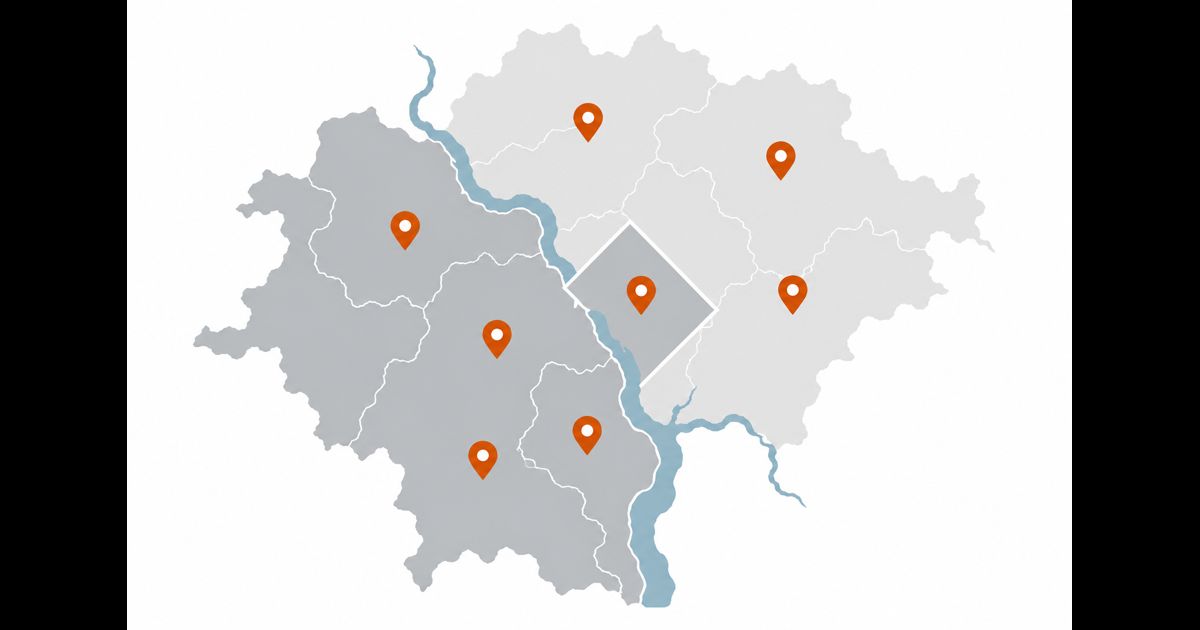
- Fairfax County, including Reston and Tysons: the county business license is due March 1, the property return by May 1 and the payment by October 5. Learn more on our page for a CPA firm in Fairfax, VA and our guide for Reston, VA.
- Town of Vienna: the business license is issued by the town, not the county, while the property return still goes to Fairfax County. Our Vienna, VA guide explains the difference.
- Arlington: the license is due March 1, the property return by May 1, and the payment by September 5. See our guide for an Arlington, VA CPA firm.
- City of Alexandria: an independent city with its own business tax office, and a rule that a business starting up after January 1 owes no business personal property tax for that year. See our Alexandria, VA guide.
- Washington, DC: franchise tax, a July 31 property return and a Basic Business License that requires a Certificate of Clean Hands. See our Washington, DC guide.
- Maryland: an April 15 annual report, county income tax collected on the state return, and an optional pass-through entity election. See our Bethesda, MD guide.
Tips for staying on top of the calendar

- Put every date on one shared calendar with a reminder at least two weeks ahead, not on the day.
- Know which jurisdiction you are in. A Vienna or Herndon mailing address does not always mean you are inside the town limits.
- Do not rely on a mailed form. Several localities mail renewals, but not receiving one does not excuse a late filing.
- Keep a fixed asset list. It supports your property tax returns and your federal depreciation.
- Ask for help early. Extensions often have to be requested before the deadline, not after.
If you want help keeping all of these straight, we handle business tax filings across Virginia, Maryland and DC as part of our accounting services. Get in touch or call (703) 865-4565.
This article is for general information only and is not tax, legal or accounting advice. Deadlines and rules change, and how they apply depends on your circumstances.

by Sangha CPA | Oct 2, 2026 | Tax Planning
With the end of 2026 in sight, now is the time to look at your tax picture, while there is still time to act on it. This is also the first full year under several federal rule changes from the One Big Beautiful Bill Act, signed on July 4, 2025, so a plan from last year may not be the right plan this year.
Below is a checklist of the year-end moves that tend to matter most for small businesses, plus the mistakes we would steer you away from. It is general information, not tax advice for your situation, so talk to your CPA before you act on any of it.
1. Start with a year-end tax projection
Before you buy anything or move any income, find out where you stand. Pull your year-to-date profit, estimate the rest of the year, and project your taxable income for 2026. That number decides whether it makes sense to speed up deductions, defer income, or leave things alone.
A projection also shows whether you are on track for the estimated payments the IRS expects, so you can avoid an underpayment penalty. The fourth-quarter federal estimated payment for calendar-year taxpayers is due in mid-January, and November is a much better time to learn you are short than January.
Tip: ask for the projection in November. Waiting until after the holidays leaves no room to act.

2. Equipment and asset purchases: use the bigger deductions wisely
The federal rules for equipment have become much more generous:
- 100% bonus depreciation is now permanent for qualifying property acquired and placed in service after January 19, 2025.
- Section 179 lets you choose to deduct up to $2,560,000 of qualifying equipment for 2026, with the deduction phasing out once total purchases pass $4,090,000. The Section 179 limit for heavy SUVs is $32,000 for 2026, though bonus depreciation can often cover the rest.
- The de minimis safe harbor lets you deduct smaller items, generally up to $2,500 per invoice or item, instead of depreciating them. The limit is $5,000 for businesses with audited financial statements, and you make the election each year with your tax return.

Timing matters: the property generally has to be placed in service by December 31, not just ordered. A truck on order in December does nothing for your 2026 return.
Avoid: buying equipment you do not need just to get a deduction. A deduction only saves a portion of what you spend, and the cash outlay is real. Also remember that states do not always follow the federal rules. Virginia, for example, has historically not conformed to federal bonus depreciation, so your state deduction can differ from your federal one. Ask about Maryland and DC if you file there.
3. Retirement contributions and owner pay
Retirement plans are one of the most dependable ways to reduce taxable income while building something for yourself. Some contributions and plan elections have a December 31 deadline, while others can be made up to the tax filing date, so find out which applies to your plan before assuming you have time.
If you own an S corporation, year-end is also the time to check that your salary is reasonable for the work you do. Paying yourself too little is a common audit trigger, and payroll has to actually run through the end of the year to count.
4. Pass-through owners: the 20% deduction and the entity-level tax election
If your business is a sole proprietorship, partnership, S corporation or LLC taxed as one of those, two items belong on your list:
- The qualified business income (QBI) deduction. The 20% deduction was set to expire after 2025 and is now permanent. Income limits, wages and the type of business all affect how much you get, so it is worth confirming that your planned year-end moves, such as owner pay, do not shrink it.
- The pass-through entity tax election. Federal law raised the cap on deducting state and local taxes, to $40,000 for 2025 and about $40,400 for 2026, with a phase-down for higher incomes and a return to $10,000 in 2030. Even so, the elective entity-level tax in states like Virginia (at a 5.75% rate) and Maryland can still be worth a look for some owners. The timing rules differ by state, and in some cases the election has to be made before you file, so ask early. The availability of these elections has also changed from year to year, so confirm what applies to your tax year.
5. Contractors, vendors and 1099s
This is the first year of a new reporting threshold. For payments made in 2026, you only have to issue a Form 1099-NEC or most 1099-MISC forms to a payee you pay $2,000 or more, up from $600. Those forms are due in early 2027, and because January 31 falls on a Sunday that year, the 1099-NEC deadline is Monday, February 1, 2027.
- Collect W-9s now. It is much easier to get a form from a contractor before the final payment than after the year closes.
- Remember what is not reported. Payments made by credit card or through payment apps are generally reported by the processor on a Form 1099-K, whose threshold has returned to $20,000 and 200 transactions, instead of by you on a 1099.
Avoid: skipping the W-9 because a contractor is probably under $2,000. You still need documentation, and amounts have a way of creeping past the line in December.
6. Clean up your books before December 31
Every tax decision above depends on accurate numbers. Before the year closes, make sure you have:
- Reconciled every bank and credit card account
- Categorized all transactions and cleared out anything sitting in an uncategorized account
- Reviewed what customers owe you and written off anything uncollectible
- Confirmed your payroll tax deposits match what your books show
- Made a list of fixed assets, which also supports local property tax returns
If your books are behind, our bookkeeping and accounting services can get them current before tax season.
Mistakes we see at year-end
- Waiting until January. By then most of the planning options are gone.
- Chasing deductions for their own sake. Spending a dollar to save thirty cents is still spending.
- Mixing personal and business spending. It makes the books harder to trust and the deductions harder to defend.
- Ignoring the state. A federal strategy can work differently, or not at all, on your Virginia, Maryland or DC return.
- Poor records. Mileage logs, receipts and written explanations matter if you are ever asked to support a deduction.
- Forgetting local filings. Federal planning gets the attention, but local business taxes have their own dates.
Local rules to keep in mind
Local business tax rules vary a lot across our region, and year-end is when local filings begin to come due. In Virginia, the business license is generally due March 1, but each locality has its own rules, and the business personal property return and payment dates differ too. DC has its own franchise tax and a July 31 personal property return, and Maryland has an April 15 annual report and property return. For the full list of dates, see our 2027 business tax deadlines calendar.
If you want to see how this plays out where you are, we have local guides for businesses working with a CPA firm in Fairfax, VA, Arlington, VA, Alexandria, VA, Reston, VA and Vienna, VA, as well as Washington, DC and Bethesda, MD.
Next steps
If you would like a year-end tax projection or help with business tax planning, get in touch or call us at (703) 865-4565. If you are also thinking about budgeting for 2027, our outsourced CFO services can help you plan.
This article is for general information only and is not tax, legal or accounting advice. Tax rules, thresholds and deadlines change, and how they apply depends on your circumstances.